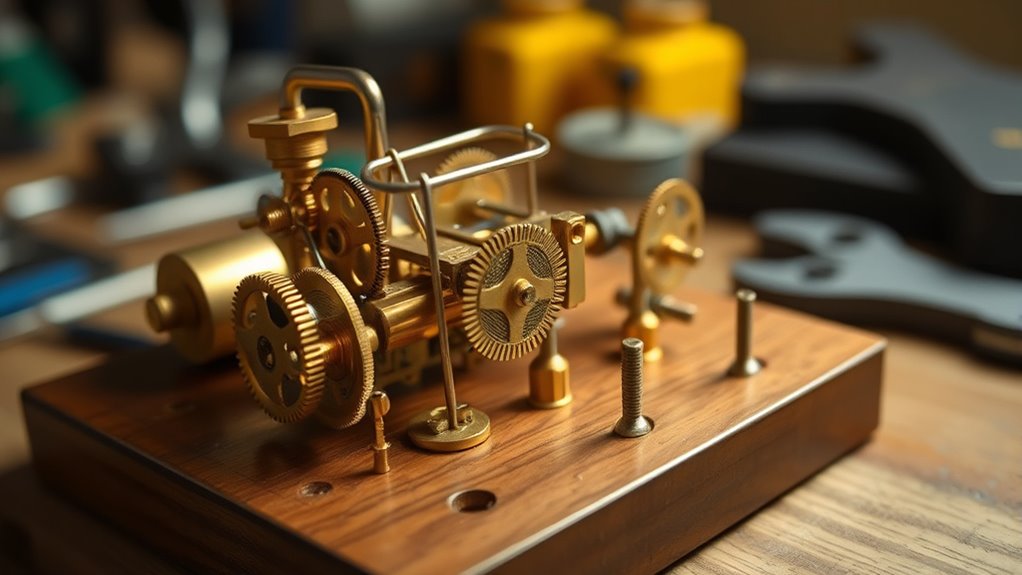

Building a miniature difference engine lets you explore mechanical computing by assembling gears that perform calculations through carefully designed gear ratios and meshing. This hands-on project demonstrates how early engineers used gear trains to add and subtract without electronics, highlighting mechanical ingenuity. As you put together and adjust the gears, you’ll see how their sizes and arrangements affect accuracy. Keep exploring to uncover the fascinating principles behind this historic technology and how it shaped modern computing.
Key Takeaways
- Building a miniature difference engine demonstrates mechanical principles behind early computational devices using gears and gear trains.
- Precise gear sizing and ratios are essential for accurate calculations and reliable mechanical operation.
- Assembling and adjusting gears offers hands-on insight into 19th-century engineering and the ingenuity of early inventors like Babbage.
- The project highlights how mechanical systems perform complex calculations without electronics, emphasizing mechanical logic.
- Creating the engine fosters understanding of historical technological development and enhances skills in mechanical design and precision engineering.

Building a miniature difference engine offers a fascinating hands-on way to understand the principles behind early computational devices. This project allows you to explore the intricate workings of gearing mechanisms, which are essential components in mechanical calculators. Gearing mechanisms translate rotational motion into precise, controlled movements, enabling the machine to perform calculations automatically. When you assemble these gears, you gain insight into how early engineers designed devices to reduce human error and increase calculation speed. These mechanisms are not just functional but also serve as a testament to the ingenuity of 19th-century inventors, making their inclusion in your project an educational experience with historical significance.
Explore gears and mechanical calculations to connect with the ingenuity of 19th-century inventors.
As you begin building your miniature difference engine, you’ll notice how carefully designed gear trains work together to carry out addition and subtraction operations. Each gear interacts with others through carefully crafted teeth, creating a complex yet elegant system that mimics the logic of modern computers. Understanding how these gears mesh and transfer motion helps you appreciate the sophistication of early mechanical computation. The gears’ sizes and ratios are vital—they determine the accuracy and reliability of calculations. By assembling and adjusting these gearing mechanisms, you see firsthand how even small changes can impact overall performance, deepening your appreciation for the precision required in historical mechanical devices. This process also demonstrates how digital literacy programs encourage playful communication and foster understanding of technology.
The historical significance of the difference engine lies in its role as a pioneering step toward automated computation. When Charles Babbage designed his engine in the 1820s, it represented a monumental leap forward in problem-solving technology. Your miniature version pays homage to this legacy, illustrating how mechanical parts could be orchestrated to perform complex calculations without modern electronics. Building it not only demystifies the engineering feats of the past but also highlights the enduring importance of mechanical ingenuity. It’s a reminder that before the age of silicon chips, complex calculations could be achieved through carefully engineered gears and levers, laying the groundwork for today’s computing technology.
Throughout the process, you’ll develop a deeper understanding of the mechanical principles that underpin early computing devices. Every gear you assemble and adjust brings you closer to replicating a piece of history. The act of building a miniature difference engine helps you see the elegance of mechanical design and appreciate the importance of gearing mechanisms in shaping the future of technology. As you complete your project, you’ll have a tangible connection to a significant chapter in scientific history, gaining both technical knowledge and admiration for the innovation that paved the way for modern computers.

Crayola Construction Paper Bulk Pack (480 Sheets) – 10 Assorted Colors, 9x12, Teacher School Supplies & Classroom Must Haves, Card Making Craft Supplies, Art Paper
- Bulk Pack of 480 Sheets: Includes 48 pages per color
- Assorted 10 Colors: Bright, varied colors for projects
- Ideal for Classroom Use: Perfect for school projects and crafts
As an affiliate, we earn on qualifying purchases.
Frequently Asked Questions
What Are the Best Tools for Assembling Tiny Mechanical Parts?
When assembling tiny mechanical parts, you need precision tools like fine tweezers, small screwdrivers, and needle-nose pliers to handle delicate components. Using the right tools helps you manipulate miniature fasteners accurately without damaging parts. A magnifying glass or microscope can improve your vision for detailed work. These tools guarantee you assemble your miniature difference engine precisely, making the process smoother and more successful.
How Do I Ensure the Accuracy of My Miniature Difference Engine?
To guarantee your miniature difference engine is accurate, focus on calibration techniques regularly. Carefully measure and adjust parts to maintain precision, and document your adjustments. Use error correction strategies, like double-checking alignments and testing each component thoroughly. Keep your tools sharp and clean, and work patiently. By diligently calibrating and correcting errors, you’ll improve the engine’s accuracy and reliable performance, making your project successful and impressive.
Can I Power the Engine Manually or Electronically?
Coincidences often reveal unexpected solutions, just like powering your miniature difference engine. You can choose between manual power, which involves turning cranks or levers, giving you tactile control. Or, opt for electronic control, connecting motors or servos for automated operation. Both methods work, but your choice depends on your project’s complexity and your preference for hands-on involvement versus automation.
What Safety Precautions Should I Take During Assembly?
When assembling your miniature difference engine, you should prioritize safety by practicing proper handling of delicate parts to avoid damage or injury. Always wear protective gear like gloves and safety glasses to shield yourself from sharp edges or small component hazards. Keep your workspace organized, work in a well-lit area, and handle tools carefully. Taking these precautions guarantees a safer, smoother assembly process and helps your project succeed without accidents.
Where Can I Find Detailed Blueprints or Schematics?
Think of detailed blueprints as the treasure map for your project. You can find historical blueprints or DIY schematics online on websites like Wikimedia Commons, Instructables, and GitHub, where enthusiasts share their designs. Museums and archives sometimes hold original plans, too. Search for “difference engine schematics” or “mechanical computer blueprints,” and you’ll uncover the detailed plans needed to bring your miniature engine to life.

TMOL Art Supplies, 175-Pack Deluxe Art Set Drawing Painting Kit with 2 Drawing Pads, Acrylic Paints, Colored Pencils, Crayons, Art Kit in Wooden Case, Gift for Artist, Adults, Teens and Kids
- Complete Art Supplies Set: 175 essential tools for all art styles
- Organized Wooden Storage Case: Sturdy mahogany case with removable drawer
- Includes Drawing and Acrylic Pads: 50-page drawing pad and 24-page acrylic pad
As an affiliate, we earn on qualifying purchases.
Conclusion
So, congratulations on building your tiny difference engine—proof that even in the digital age, you can still flirt with mechanical mayhem. Who needs sleek circuits when you can tinker with gears and levers, right? Just don’t forget to admire your masterpiece next time your computer crashes—at least your miniature engine won’t blame you for breaking it. Truly, nothing says “progress” like proudly showcasing a device that’s almost as obsolete as your old dial-up modem.

Caliart 176PCS Art Supplies Sketching Kit, 100 Sheets 3-Color Sketch Book
- Complete Artist Drawing Set: Includes 176 pieces for all skill levels
- Versatile Drawing Tools: Pencils, charcoal, watercolor, metallic, and blending tools
- Premium Quality Supplies: Pre-sharpened pencils and durable accessories
As an affiliate, we earn on qualifying purchases.